

The Connection Between ADHD and Sensory Processing
And Why It Matters.
I've discovered something that many ADHD guidelines completely miss:
Sensory processing differences are incredibly common in people like us too (people with ADHD)
A major systematic review and meta analysis across various scientific studies and over 5000 participants has found that people with ADHD show significantly higher levels of atypical sensory processing across all four areas compared to neurotypical people:
sensitivity
avoiding
seeking
low registration
Scientists, researchers and media primarily focus on autistic individuals when researching sensory processing differences. Currently, the sensory processing profile of someone with ADHD isn’t taken into consideration throughout the diagnostic assessment and I believe it should be.
What This Means for You
Social media has been amazing in helping raise awareness of ADHD and educating the general population. More and more people are sharing their lived experience which is amazing. On the other hand it shines a light on the massive gap between scientific research and lived experience relative to ADHD.
The gap between male vs female presentation research and now the gap between the sensory processing research. I wonder what else hasn’t had much limelight? We’ll be digging deep into scientific papers and rallying science, funders, researchers to explore ADHD more attentively as undiagnosed and untreated ADHD costs the UK economy £17 Billion a year! How? That’s another article in itself.
For example, untreated or unknown sensory sensitivity can prevent someone going to the gym. They don’t understand why they don’t like it, they just don’t. They can feel this inner tension, an inner anxiety or think they are frustrated, and can be quick tempered. Some people feel completely inadequate and leave.
As you can imagine, that has a knock on effect on their physical and mental health affecting overall life expectancy and longevity. In fact, a recent study found:


Women are mostly affected by losing 27.5% more life than men, losing almost 9 years from their life, dropping their life expectancy from 84 years to 75 years.
Read that again.
In 8.64 years you can obtain a full medical degree and a masters on top…knock a nice €145,152 off your mortgage, watch your kid go through primary school, meeting your grandkids.
It’s a lot of life lost.
By understanding our brain’s neurotype profile, our sensory profile and how we operate in this world, we can begin to create an environment that works for us.
Make better choices and advocate for our needs.
The four areas of sensory processing typically show up in daily life like:
1. Sensitivity (Sensory Over-Responsiveness)
Being easily overwhelmed by loud noises, bright lights or strong smells.
Finding clothing tags or certain fabrics unbearably irritating.
Struggling to concentrate in busy environments because every small sound or movement is noticed.
Have you ever found yourself feeling completely overwhelmed or frustrated and unsure why? Perhaps you suffer from headaches and wondered why you preferred to work at home (alone) than in an open plan office? Maybe the sound of clicking of keyboards or the blinding fluorescent lights are actually taking more out of you than you realise.
2. Avoiding (Active Withdrawal from Sensory Input)
Leaving a crowded room because the noise feels too much.
Preferring dim lighting and quiet spaces.
Avoiding certain foods because of texture or smell.
Are you that person who (unknowingly) declines invitations at loud restaurants and opts for a walk in the park instead? I say unknowingly as you may not know why you don’t like those restaurants.
3. Seeking (Sensory Craving/Active Engagement)
Constantly fiddling with objects, tapping or pacing.
Playing music loudly or turning up the TV volume more than others.
Enjoying spicy or strong-tasting foods.
A pen chewer? Needing an extra tactile input to stay regulated? Yup, I can relate.
4. Low Registration (Sensory Under-Responsiveness or Missed Cues)
Not noticing when someone calls their name.
Missing subtle tastes, smells or body cues (like hunger).
Appearing “tuned out” because sensory input doesn’t register strongly.
Have you ever cut yourself and didn’t realise it until you saw blood everywhere?
What This Means for Me
Considering the above, curiosity got the better of me, so I took the TriggerAtlas test. I wanted to see if it flagged any sensitivities even though I knew it was originally built for autistic individuals.
I took TriggerAtlas 6months before I came across the ADHD sensory processing research. Here are my highest sensitivity areas:
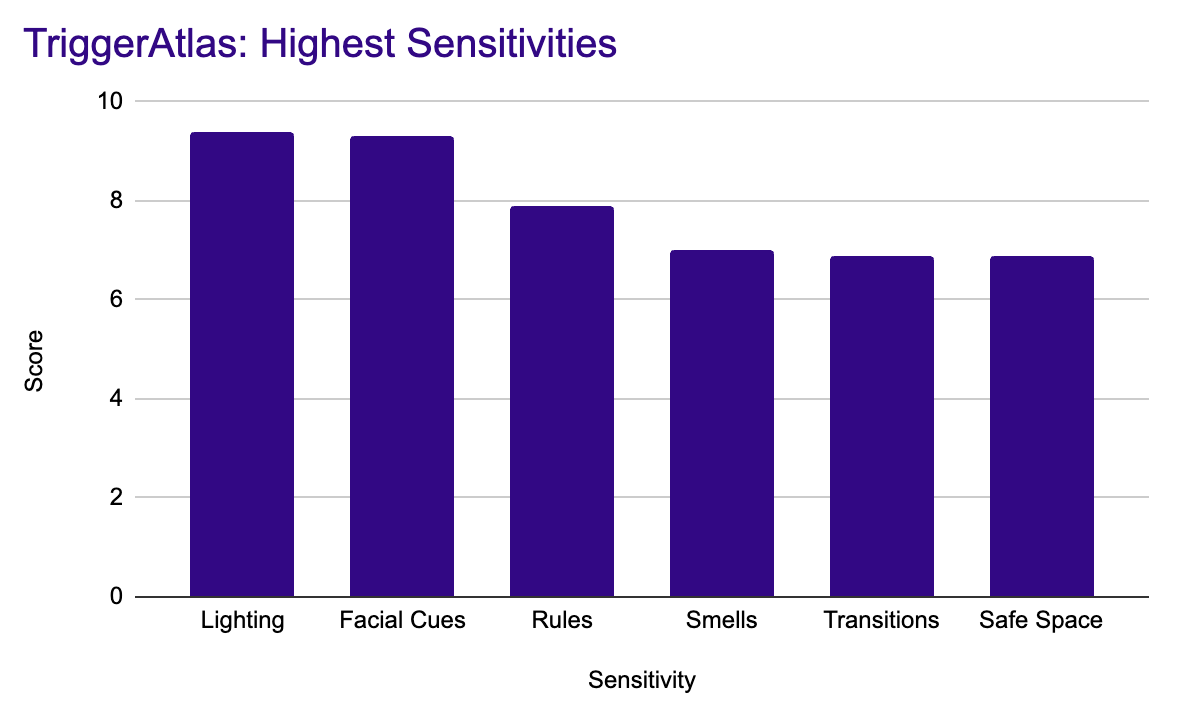
Looking at my own TriggerAtlas results, I made the various changes to my daily life it suggested. I invested in earplugs, noise cancelling headphones and brown tinted glasses.
I can honestly say it has changed my life for the better.
I never realised how much the fluorescent lights actually affected me until I was able to wear tinted glassess indoors. I also wear them at the gym - it looks like I’m wearing sunglasses in a dark-ish (with bright fluorescent lights) room.
I was conscious of wearing the tinted glassess at the beginning. Of course my anxiety kicked in. However, ater I wore them “on and off” for a full session, I felt more comfortable during the next session as the benefit outweighed my paranoia. The difference I feel internally is unbelievable, I don’t have the words to describe it fully at the moment.
TriggerAtlas is a 30-40 page report that has been analysed by a therapist and emailed to you within a week of completing the contextual questionnaire. The report covers six domains and 150 trigger points.
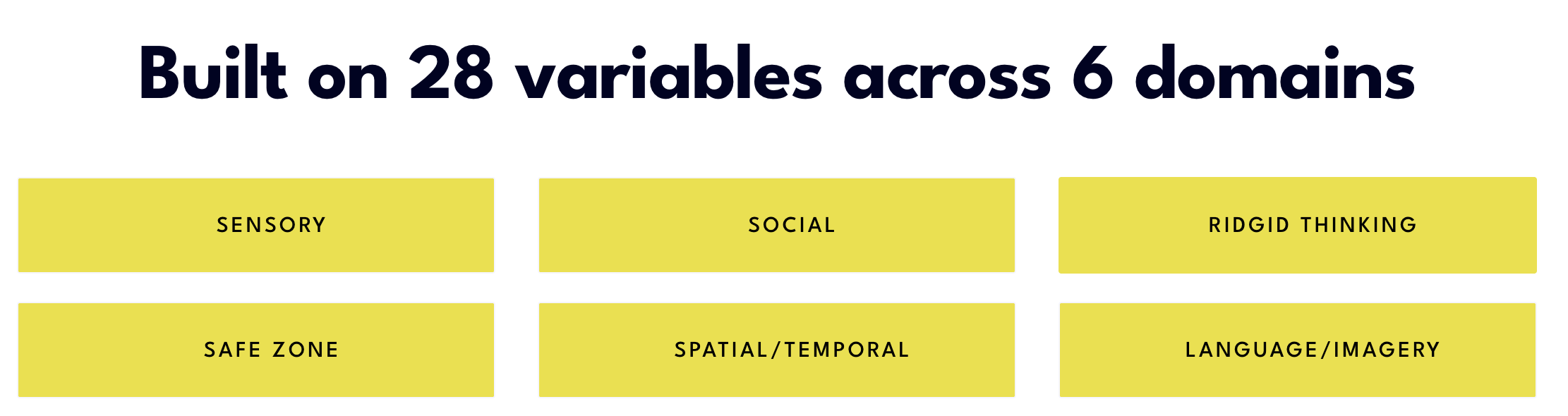
The report is full of insights and practical strategies, so you can create an external environment that works for you.
Honestly, I didn’t know how much the “outside environment” actually affected my “internal environment”, like my emotions and levels of anxiety. At the time when I completed TriggerAlas all I wanted to do was understand myself a bit more, and now, this research validates that people with ADHD also have atypical sensory differences.
My sensory profile shows:
Lighting (9.4/10) - Bright lights, fluorescent lighting and rapid changes cause immediate discomfort and cognitive disruption
Facial cues interpretation (9.3/10) - Reading expressions is exhausting emotionally which can to misunderstanding
Relationship to rules (7.9/10) - When established norms aren't followed, my brain treats it as environmental instability requiring immediate attention
Smells (7.0/10)- Strong odours can trigger nausea and sensory panic
Changes & transitions (6.9/10) - Even minor schedule modifications require significant cognitive resources to process
Disruption of safe spaces (6.9/10) - Material changes to my secure environment demand careful preparation to avoid overload
⠀Why This Matters
The research confirms that the sensory processing differences are neurobiological differences and deserve recognition and accommodation.
How we experience the world, inside and out, are part of the neurodivergent operating system which require specific environmental changes and supports.
The more people are aware of these differences, the easier it will be to identify and accommodate.
Current ADHD diagnostic assessment and treatment approaches focus heavily on attention and hyperactivity symptoms while ignoring sensory processing.
But my lived experience (and others I’ve spoken to) shows these sensory patterns can significantly impact daily functioning, relationships and overall wellbeing.
I tracked my progress and within 3months of making the changes, my overall wellbeing increased by 45% and my ability to regulate my emotions increased by 40%.
This is what I mean’t earlier when I said it changed my life.
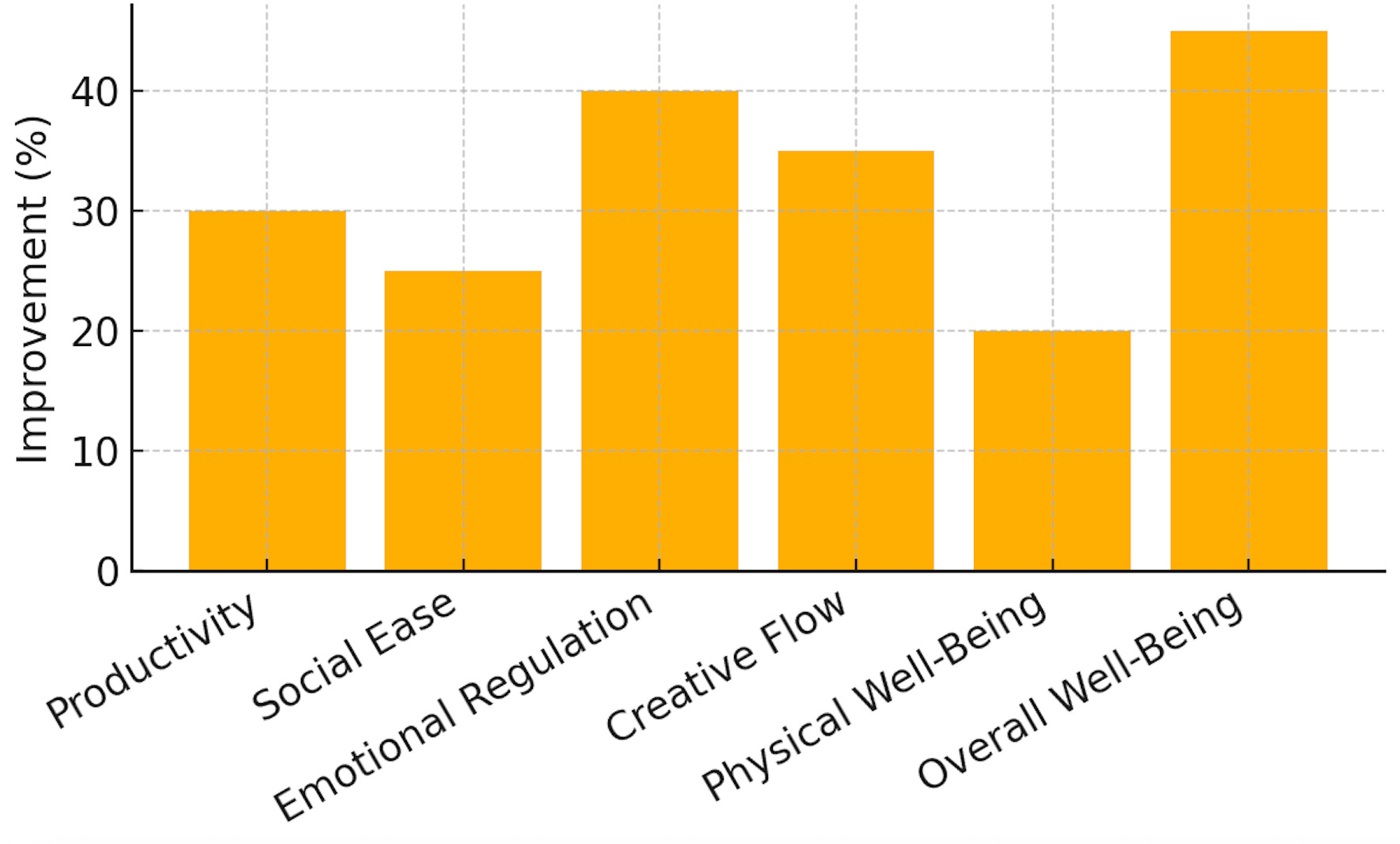
As a result I'm learning to work with my sensory profile through environmental modifications, introducing protective strategies and recovery routines.
A recovery routine is something you enjoy or a nap or a walk through trees, that you do (schedule) after you have had exposure to a lot of stimulation.
Understanding that my brain processes sensory information differently helps me advocate for what I need and reduce self-criticism (yes that monkey-mind chatter that never shuts up…), especially when I reach sensory overload.
I have now perfected the non-guilt afternoon Netflix binge on a school day…classic #ADmomo
This research validates that comprehensive ADHD support should include sensory assessments and interventions. Not just for kids, but especially for adults who may have spent decades masking or misunderstanding these patterns.
That’s why we have incorporated TriggerAtlas into our diagnostic assessment process at ADHD Services.