

What Is "Executive Function"?
How To Use An Interest Based Nervous System To Your Advantage

It was 3:47 pm on a Tuesday afternoon when I found myself standing in my kitchen, holding a cuppa and staring at the dishwasher that had been beeping for completion for... honestly, I had no idea how long.
The laundry was half-folded on the spare bed (from Sunday) and my laptop was open with 63 tabs about "productivity hacks”…the irony!
Somewhere in the back of my mind, a tiny voice was screaming that I had a deadline. Today? Hmm maybe yesterday? I don’t know. That's when I realised my brain had essentially filed for divorce from basic functioning.
When I tell people that I’m trying to get on top of things, they say to “just get organised”, to “just do it” when you finish work before anything else, or in-between calls?
In my head I kept hearing…“I tried all that” and I’ve been trying to crack this barrier my entire life. It’s exhausting.
“Our executive function is a set of mental skills that help us plan, organise, start and complete tasks. ”
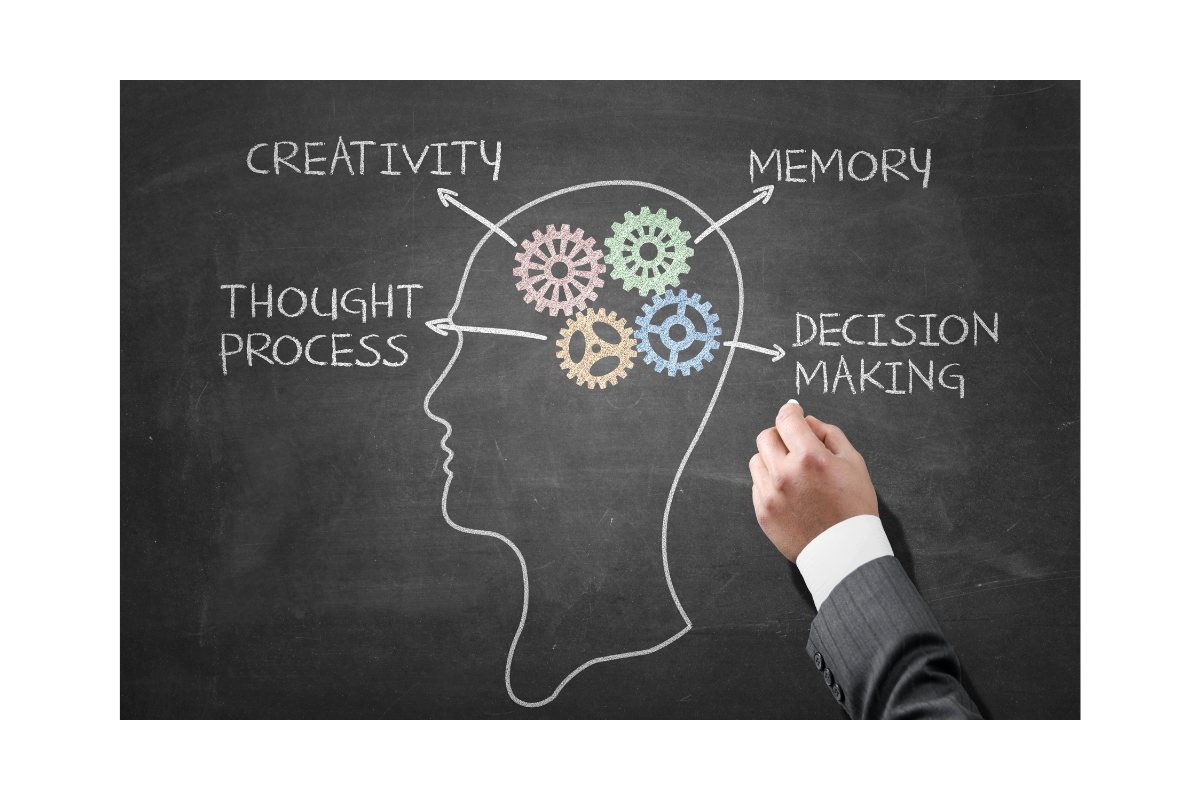
The core executive function skills are:
Working memory - this is like your brain’s sticky notes to remember things, like remembering instructions while completing a task…however, these sticky notes keep falling off.
Flexible thinking - pivoting when plans go sideways (as the always do) or shifting between different tasks, perspectives, new situations or new rules.
Self-control - being able to direct yourself, resisting distractions, suppressing impulses or “thinking before acting”…like an internal referee, that tends to forget the rules.
The following also fall under executive function capabilities:
Planning and Organisation - creating step-by-step approaches to tasks; organising materials, time and information.
Time Management - estimating how long tasks take, allocating time appropriately and meeting deadlines.
Task Initiation - starting tasks without excessive procrastination or overcoming inertia to begin activities.
Sustained Attention - maintaining focus on tasks despite distractions or boredom.
Self-Monitoring - tracking your own performance, recognising mistakes and adjusting behaviour accordingly.
Emotional Regulation - managing and modulating emotional responses appropriately to situations.
Goal-Directed Persistence - maintaining effort and motivation toward long term goals despite obstacles or setbacks.
Metacognition - thinking about your own thinking; evaluating strategies and making adjustments.
Decision making - choosing between 204 equally urgent tasks!
As you can imagine, an executive function that is dysfunctional can seriously inhibit our daily life. Let’s leave how it would affect work aside for a moment. An executive dysfunction affects our ability to organise things, like arranging a trip, a hair cut or going food shopping. It inhibits our follow through on tasks and is responsible for locking ourselves out of our house.
It’s responsible for us choosing the instant gratification (bad choice) over the longer term choice, affecting our health and finances.
Ultimately, playing havoc with our ability to regulate our emotions.
A lot of people tend to think that we are lazy or lack any willpower. That’s totally untrue and the danger is that a lot of ADHDers tend to adopt these negative beliefs, generating an overwhelming amount of internalised shame and guilt.
Often left wondering “why can’t I do these simple tasks in life?”
Believe me, we have tried everything. Absolutely everything!
I bought productivity course after productivity course, app after app. I used to have about 5-6 productivity apps on the go at any one time…as well as a written planner and my daily Google calendar.
It got to the point where I was spending more time jumping between productivity systems than actually getting any work done. It was insane.
I’m not the only one, I’ve talked to many people with ADHD who had a similar experience.
Trying to break the illusive productivity code that everyone else seems to have mastered seems impossible to ADHDers. As a result, never achieving their full potential, hiding from challenges and holding themselves back. Jumping from productivity system to productivity system…frozen in fear.
It’s not all bad! I promise.
Over the last few years I have studied ADHD, autism and wider neurodivergent co-occurring presentations. Be it, reading scientific journals, talking to others with ADHD, talking to medical and healthcare professionals, setting up a diagnostic clinic, building an AI clinical diagnostic tool and devouring absolutely everything I could on the internet.
I have found, that thanks to our Executive Dysfunction we are incredibly talented and creative.
We have an interest based nervous system which means we are highly motivated by interest, challenge, novelty, urgency and passion. Others are motivated by importance based attributes such as reward, consequences and deadlines.
Understanding this difference can revolutionise how you approach your work and life. When we truly have a strong interest in something, we have an even stronger drive to do what needs to be done thus accomplishing the tasks in record time.
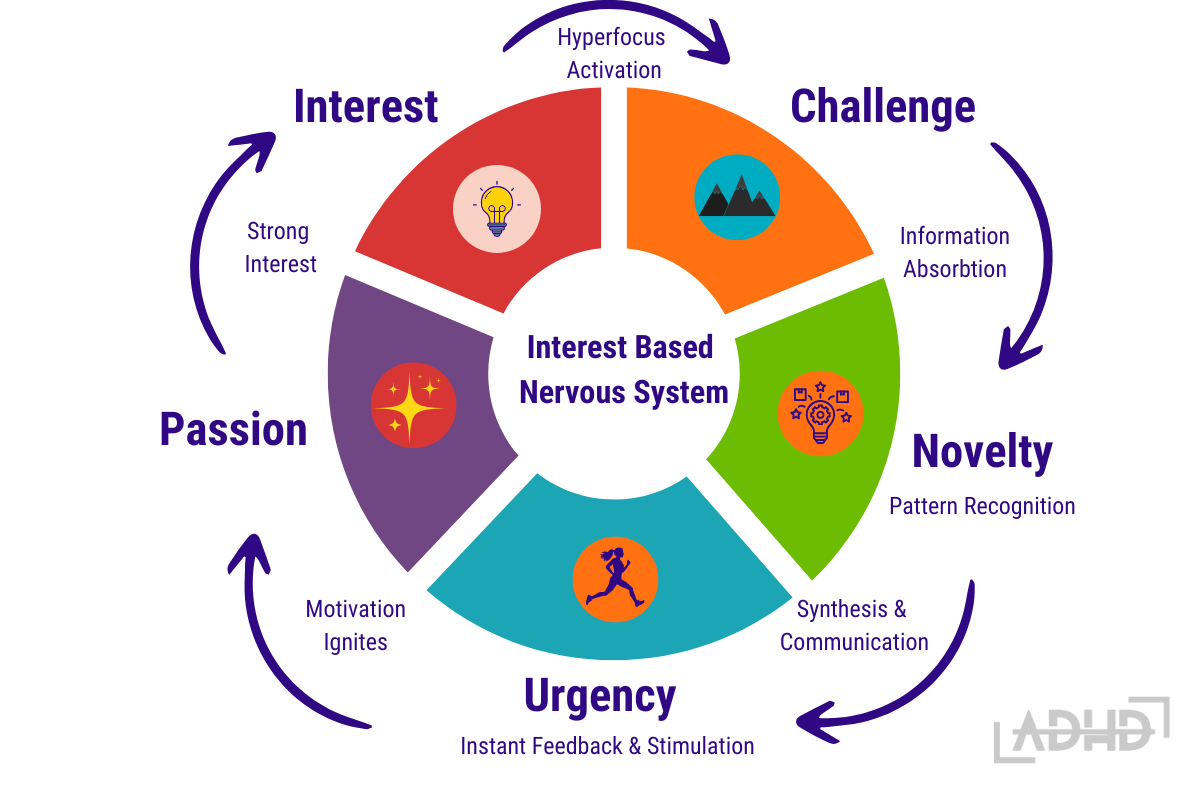
Thanks to our hyperfocus abilities, we can devour subjects that interest us, understand large amounts of data and make them easy digestible to others. This stimulation or instant feedback loop fosters our ability to achieve great things.
Learning about executive function capabilities of neurotypical vs ADHDers, I was convinced this was the root cause to a lot of my daily challenges.
In order to understand my brain better, I put myself through various mini-experiments, as I wanted to see if I could outlearn the dysfunction.
I gained some valuable insights and will share through my writing.
One major and totally overlooked reason why people with ADHD struggle with everyday tasks is due to the phenomenon I like to call “learnin4g motivation”.
Learning Motivation: “the act of learning is more interesting and motivational to the ADHD brain than the outcome.”
Read that again.
The act of learning feeds our ADHD brains with more dopamine than actually achieving the outcome.
Novelty Seeking (Learning): New information, the excitement of discovery, and the early stages of a project provide high levels of novelty and interest, triggering the dopamine release that aids attention and focus. This initial engagement is rewarding.
Dr Tracey Marks, Why People with ADHD Procrastinate
This was a lightbulb moment, another #ADmomo for me.
It suddenly explained everything in a language I could understand…why I had 63 tabs open about productivity instead of actually being productive?? Why I’d bought course after course but never quite finished implementing them?? Why the Sunday laundry was still on the spare bed???
I wasn’t failing at productivity. I was succeeding at learning about productivity. And my brain was rewarding me for it.
Understanding this distinction between interest-based and importance-based nervous systems changed everything for me. I stopped trying to force myself into neurotypical productivity systems that were never designed for how my brain works.
Instead, I started working with my executive dysfunction, not against it.
I learned to harness novelty, challenge and urgency intentionally. I stopped beating myself up for needing different fuel than everyone else. And I started building systems that actually worked for an interest-based nervous system.
The dishwasher still beeps. The tabs are still open. But now I understand why…and more importantly, I know what to do about it.
If you’ve been struggling with the same battles, wondering why “just do it” doesn’t work for you, you’re not broken. Your brain just runs on different fuel. And once you understand that, everything changes.